October 2026

As the leaves turn here in Boston, I find myself reflecting on June, when so many of you joined us for the 2026 Annual Meeting. It was a privilege to welcome the Society to my home city, and I’m grateful to everyone who traveled, presented, shared ideas, and contributed to the conversations that make these gatherings so valuable.
This year’s meeting also marked an important first for our Society. For the first time, we invited members to submit symposium proposals, and the response exceeded our expectations. The resulting sessions brought new voices to the podium, fostered meaningful exchanges between clinicians and researchers, and showcased the remarkable breadth of expertise within our membership. Thank you to everyone who submitted a proposal, and congratulations to those who presented.
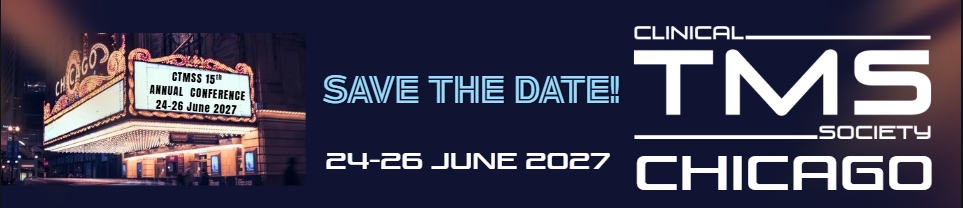
We hope to build on that momentum as we prepare for the 2027 Annual Meeting in Chicago. The call for symposium proposals is now open, and I encourage you to share your ideas. Proposals are due November 2nd, with details available at Submit a symposium proposal.
As we celebrate the innovation and collaboration that move our field forward, I also want to take a moment to remember someone who embodied both.
One year ago, we lost Dr. Nolan Williams. Nolan was a remarkable scientist, physician, and human being. In a relatively short career, he transformed how TMS is practiced today, challenging conventional thinking and opening new avenues for treating patients who had exhausted other options. His brilliance was matched by his dedication to improving the lives of those suffering from mental illness.
At our Annual Meeting in June, we honored Nolan with the Visionary Award, recognizing his extraordinary contributions to our field. Yet no award can fully capture the impact he had on his colleagues, friends, and family, or the loss felt by so many in our community.
As we remember Nolan, I hope we can also reflect on how we care for one another. We dedicate our professional lives to helping people through some of their most difficult moments, but we must remember that those who care for others also need care themselves. I encourage each of us to reach out to colleagues, trainees, and friends, to make space for meaningful connections, and to foster a community where seeking support is met with compassion and understanding.
Thank you for all you do for your patients, for our field, and for one another. It is a privilege to be part of this community.
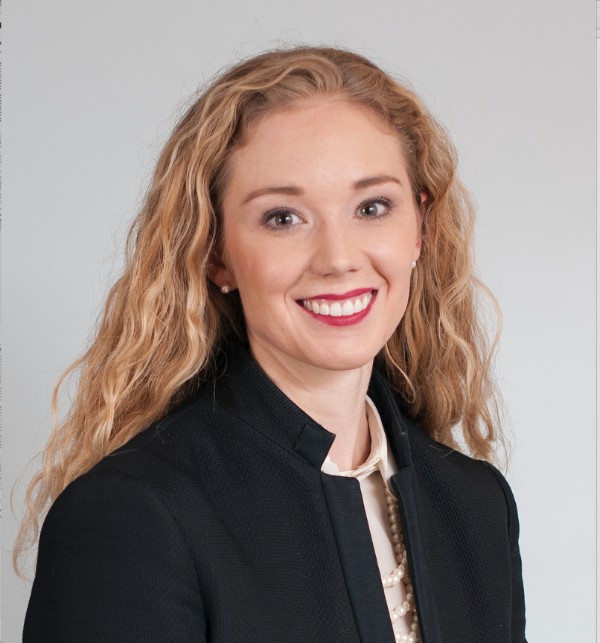
Warmly,
Tracy Barbour, MD
President
Clinical TMS Society

Clinical Standards Committee: The Clinical Standards Committee has been advancing projects aimed at providing practical, evidence-informed guidance for clinicians delivering TMS. Current efforts include finalizing a CTMSS statement on TMS during pregnancy, reviewing evidence and regulatory developments related to EEG-guided TMS approaches, updating existing Society clinical statements, and identifying future guidance needs in areas such as TMS after non-response, accelerated protocols, remote supervision, and informed consent. The committee is also working to improve how clinical guidance is communicated so members have timely, useful resources to support patient care and clinical decision-making.
Legal, Business & Ethics Committee: The LBE committee is small, but includes many Board Members and prior Officers. We are in the process of tracking and archiving historical Bylaw changes, and a comprehensive update Society Policies and Procedures. We are often asked to review and edit various forms and generally give our opinions on the most efficient and prudent ways to just get things done! We help handle complaints and are often the first to evaluate new issues or problems facing CTMSS members or leaders. If you are good with documents, words and have ideas how things should be done, please apply to join us!

CTMSS is spotlighting members representing the diverse roles, career stages, regions, and areas of TMS practice and research within our community. Members will share their work, current initiatives, practical insights, and opportunities for connection and collaboration. Each committee will spotlight a member annually.
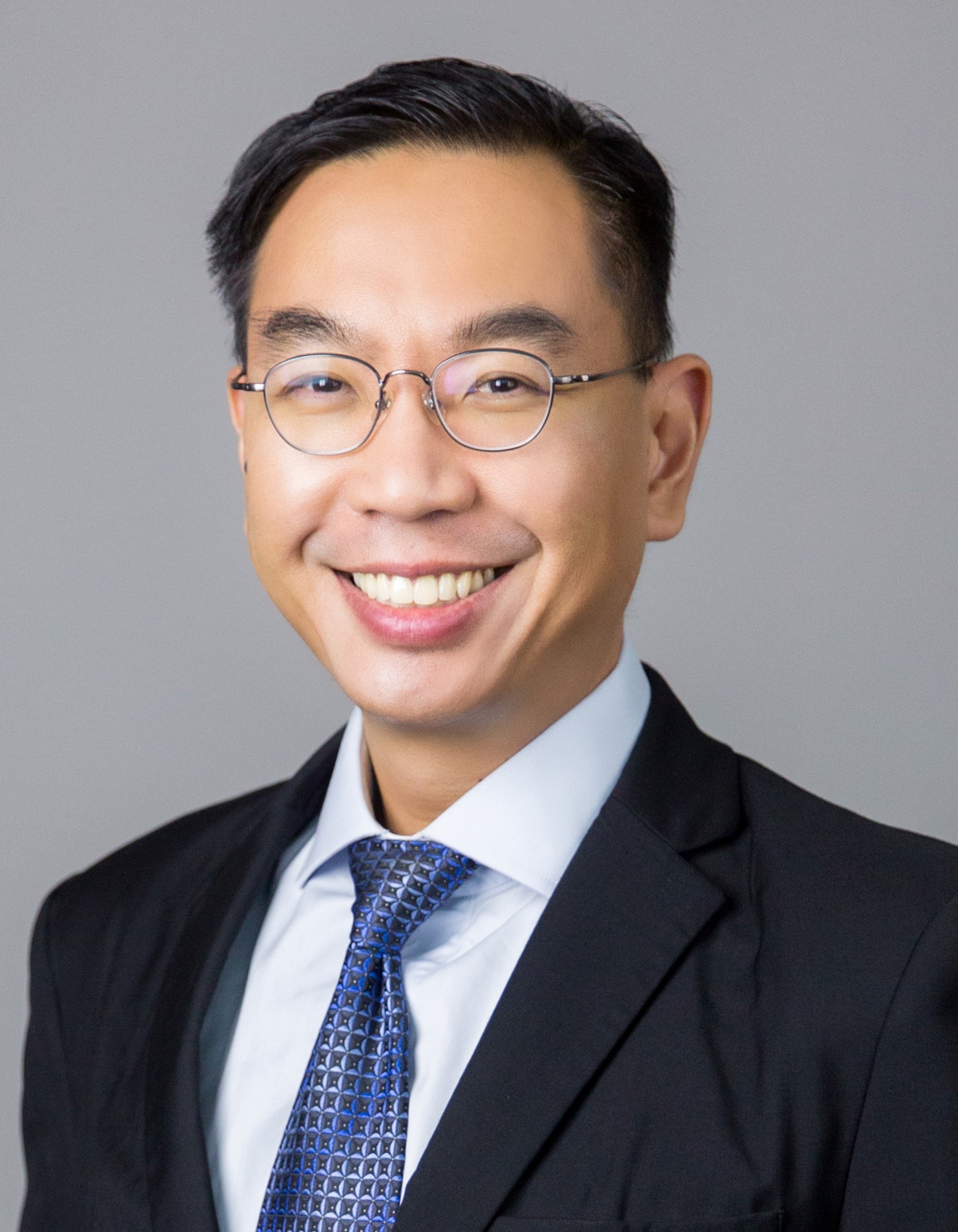
October Member: Tor Phern-Chern, MD
Tell us about yourself and the work you do.
I’m a consultant psychiatrist and Director of the Centre for Interventional Psychiatry at the National University Hospital in Singapore, where I look after rTMS and intermittent theta burst, ECT, and ketamine/esketamine. Alongside my clinical work, I lead a precision-neuromodulation research programme using individual functional connectivity to determine where, in a given patient’s brain, stimulation should actually go—working with computational imaging colleagues at NUS and partners across Singapore’s public healthcare clusters. I serve on the boards of the Clinical TMS Society, International Society of ECT and Neurostimulation, and Neuromodulation Society of Singapore, and contribute to training, SOPs, and trial infrastructure.
What project, achievement, or initiative are you excited about right now?
Three things. First, we’re running a randomised, double-blind trial comparing connectome-guided and standard Beam F3 targeting in accelerated iTBS for treatment-resistant depression. We’re still blinded, so I can’t say how it is going—but the fact that the question is now being asked head-to-head, rather than argued about at conferences, is exciting. Second, supported by the Singapore Clinical Research Institute, we’re building a regional TMS and neuroimaging network across Asia-Pacific. Individual centres rarely have the numbers to run definitive interventional trials. Together, we might. Third, Singapore PULSES has sparked enormous interest in TMS referrals, training, and collaboration across the region.
What lesson, resource, or tip would you share with fellow members?
Measure everything from the first patient. Not just baseline and endpoint scores, but coil position, protocol deviations, medication changes, dropouts, and why. Most clinical TMS services accumulate hundreds of treatment courses yet can say almost nothing rigorous about them afterward: the data was never captured in usable form. Building a simple, structured dataset into routine workflow costs little at the start and is nearly impossible to reconstruct later. It makes your service auditable, makes you a credible trial site, and—most importantly—will eventually tell you things about your own patients that published literature won’t.
How can we connect, collaborate, or support you in your TMS journey?
Collaboration is key, that is what makes CTMSS and other professional associations so valuable. Three invitations: If you run a TMS service in Asia-Pacific and would consider joining a multi-site trial network, please get in touch; we’re actively recruiting sites. If you’re working on individualized targeting, I’m glad to compare notes on methods. And if you are passing through Singapore, do come and visit the Centre—we host visitors regularly, and I learn as much from those conversations as from anything else. Reach me at CIP@nuhs.edu.sg or on LinkedIn.

2027 TMS Visionary Award
Deadline to Submit: November 10, 2026
The Clinical TMS Society invites nominations for the 2027 TMS Visionary Award—our highest honor recognizing an individual whose innovation, influence, and advancement have transformed the field of TMS. Submit Today!
Fellows Class of 2027
Deadline to Nominate: Dec 31, 2026
The Clinical TMS Society is now accepting applications for the 2027 Fellow designation. CTMSS Fellowship recognizes active members whose sustained service, leadership, and professional contributions have made a meaningful impact in transcranial magnetic stimulation and the Society. Apply Today!
SAVE THE DATE
Tuesday, November 10, 2026 | 12:00 p.m. EST
Dr. Jonathan Downar will present the article, “Real-world effectiveness of a single-day course of transcranial magnetic stimulation using an Optimized, Neuroplasticity-Enhanced regimen in Bipolar Depression (ONE-BD).” Participation in the journal club—and journal access—is free and open to both Society members and non-members.
Transcranial Magnetic Stimulation is the Society’s open-access journal and the first premier journal dedicated to clinical and foundational studies of TMS.
The journal aims to improve the clinical effectiveness of TMS for brain disorders through articles pertaining to clinical efficacy and effectiveness (including randomized controlled trials, naturalistic and retrospective studies, case series and case reports) for both investigational and FDA-cleared indications; studies focused on foundational TMS mechanisms (including animal and human work), biomarkers, technologic advances, parameter space selection, computational modeling, epidemiological, ethical, legal, and safety aspects. Article types include original articles, review articles, commentaries, and letters to the Editor. Special issues of the journal will be considered based on scientific merit. Articles on related non-invasive brain stimulation modalities are welcomed.
Save the Date: November Grand Rounds, Nov 3, 2026 at 8:00pm ET | 5:00pm PT
Intermittent Theta Burst Stimulation for Attention-Deficit/Hyperactivity Disorder
Speaker: Brian Kavanaugh, PsyD
Register for November Grand Rounds
Member: $25 Trainee Member: FREE Non-Member: $50
Our Mission
An international medical society dedicated to optimizing clinical practice, supporting research, and increasing access to high quality, evidence-based Transcranial Magnetic Stimulation.




Clinical TMS Society
5034A Thoroughbred Lane
Brentwood, TN 37027
+1 (615) 649-3074